Stop hand-writing test cases: generate an eval dataset with the WEC API

 ++
++
Your eval passes 100% — of the two test cases you typed by hand. Real users won't phrase things the way you did.
In part 1 and part 2 we built a real eval harness — assertions, schema validation, a model matrix. But two cases can't tell you if your app works; they can only tell you it didn't crash on two inputs.
This guide fixes that. The skill is producing a dataset you can actually trust: we use the WEC Inference API to generate labeled tickets, then validate and curate them — because generated labels are not automatically correct, and treating them as gospel just moves the bug. The result is real test data at scale. When you finally run it through the part-2 harness, coverage surfaces the failures — genuine misclassifications and debatable labels — that two hand-picked cases hide.
How it fits together
Each step feeds the next, ending in a dataset that plugs straight into the part-2 eval:
Prerequisites
-
A WEC Inference API key — see Inference → API Keys.
-
jq,curl, and Node.js 22+ (Promptfoo runs vianpx). -
Your key exported and sanitized (a pasted key often carries invisible characters):
export WEC_API_KEY='sk-your-key'export WEC_API_KEY=$(printf '%s' "$WEC_API_KEY" | LC_ALL=C tr -cd '[:print:]')
If a call returns a 401 / "invalid API key", your key is expired or revoked — generate a
fresh one in Inference → API Keys. See Troubleshooting.
Step 1 — Generate one labeled batch
Ask the model for tickets with their answers — the labels are what make it a dataset, not
just inputs. We reuse the exact schema from part 2 (category + priority enums):
curl -s https://inference.wiline.com/v1/chat/completions \
  -H "Authorization: Bearer $WEC_API_KEY" -H "Content-Type: application/json" \
  -d '{
    "model": "Qwen2.5-3B-Instruct",
    "temperature": 0.7,
    "messages": [{"role":"user","content":"Generate 8 diverse, realistic customer support tickets for a cloud hosting company. Return ONLY JSONL (one JSON object per line), each with keys: ticket (string), category (one of: billing, technical, account, other), priority (one of: low, medium, high). No markdown, no fences."}]
  }' | jq -r '.choices[0].message.content'
{"ticket":"Our server went down unexpectedly and we're not sure what caused it.","category":"technical","priority":"high"}
{"ticket":"We need to upgrade our plan but the system is showing an error message when trying to change plans.","category":"account","priority":"medium"}
{"ticket":"We're having trouble accessing our database and can't seem to log in.","category":"technical","priority":"high"}
... 5 more lines ...
 Figure 1. A single generation: 8 diverse tickets, each already carrying its
 category and priority label.
Clean JSONL, valid labels, real diversity — and it came back in seconds. We deliberately picked a
small, non-reasoning model (Qwen2.5-3B-Instruct) for generation. Here's why that matters.
Reasoning models return their chain-of-thought in a separate reasoning_content field — tokens
you pay for but never use. Ask a reasoning model like Qwen3.5:9B for a few tickets and compare the
hidden reasoning against the actual answer:
curl -s https://inference.wiline.com/v1/chat/completions \
  -H "Authorization: Bearer $WEC_API_KEY" -H "Content-Type: application/json" \
  -d '{"model":"Qwen3.5:9B","temperature":0.7,"messages":[{"role":"user","content":"Generate 3 realistic customer support tickets for a cloud hosting company. Return ONLY JSONL, keys: ticket, category, priority. No markdown, no fences."}]}' \
  | jq '{model, completion_tokens: .usage.completion_tokens, reasoning_chars: (.choices[0].message.reasoning_content|length), answer_chars: (.choices[0].message.content|length)}'
{
  "model": "Qwen3.5:9B",
  "completion_tokens": 2000,
  "reasoning_chars": 7116,
  "answer_chars": 412
}
 Figure 1b. For just 3 tickets,
 Qwen3.5:9B wrote 7,116 characters of hidden reasoning to
produce 412 of answer — you pay for all ~2,000 completion tokens. (Counts vary per call; the
lopsidedness doesn't.) That's why we generate with the small, non-reasoning Qwen2.5-3B — and it's
the same reason those reasoning models stumble on structured output in Step 5's matrix.
Step 2 — Validate before you trust it
Never treat generated data as ground truth without checking it. Save a batch and validate three things: every line parses, every label is in-enum, and the classes are reasonably balanced.
curl -s https://inference.wiline.com/v1/chat/completions \
  -H "Authorization: Bearer $WEC_API_KEY" -H "Content-Type: application/json" \
  -d '{"model":"Qwen2.5-3B-Instruct","temperature":0.7,"messages":[{"role":"user","content":"Generate 8 diverse, realistic customer support tickets for a cloud hosting company. Return ONLY JSONL (one JSON object per line), each with keys: ticket (string), category (one of: billing, technical, account, other), priority (one of: low, medium, high). No markdown, no fences."}]}' \
  | jq -r '.choices[0].message.content' > tickets.jsonl

# 1) do all lines parse as JSON?
jq -e . tickets.jsonl > /dev/null && echo "all lines valid JSON" || echo "INVALID JSON present"

# 2) any out-of-enum labels? (no rows printed = all valid)
jq -c 'select((.category|IN("billing","technical","account","other")|not) or (.priority|IN("low","medium","high")|not))' tickets.jsonl

# 3) class distribution
jq -rs 'group_by(.category)[] | "\(.[0].category): \(length)"' tickets.jsonl
all lines valid JSON
account: 2
billing: 2
other: 1
technical: 3
 Figure 2. Validation output — every line parses, no out-of-enum labels, and a reasonable class spread.
The intuitive ["billing",...] | index(.category) fails with "Cannot index array with
string" — inside the pipe, . is the array, so .category tries to index it. Use
.category | IN("billing", ...) instead. See Troubleshooting.
Step 3 — Scale up and dedupe
One batch of 8 isn't enough. Loop the call a few times (higher temperature for variety across batches), concatenate, then dedupe by ticket text:
for i in $(seq 1 5); do
  curl -s https://inference.wiline.com/v1/chat/completions \
    -H "Authorization: Bearer $WEC_API_KEY" -H "Content-Type: application/json" \
    -d '{"model":"Qwen2.5-3B-Instruct","temperature":0.9,"messages":[{"role":"user","content":"Generate 8 diverse, realistic customer support tickets for a cloud hosting company. Return ONLY JSONL (one JSON object per line), each with keys: ticket (string), category (one of: billing, technical, account, other), priority (one of: low, medium, high). No markdown, no fences."}]}' \
    | jq -r '.choices[0].message.content // empty'
  echo "batch $i done" >&2
done > tickets_raw.jsonl

# dedupe by ticket text
jq -sc 'unique_by(.ticket)[]' tickets_raw.jsonl > tickets_dataset.jsonl
echo "raw: $(wc -l < tickets_raw.jsonl)  →  deduped: $(wc -l < tickets_dataset.jsonl)"
raw: 40 → deduped: 40
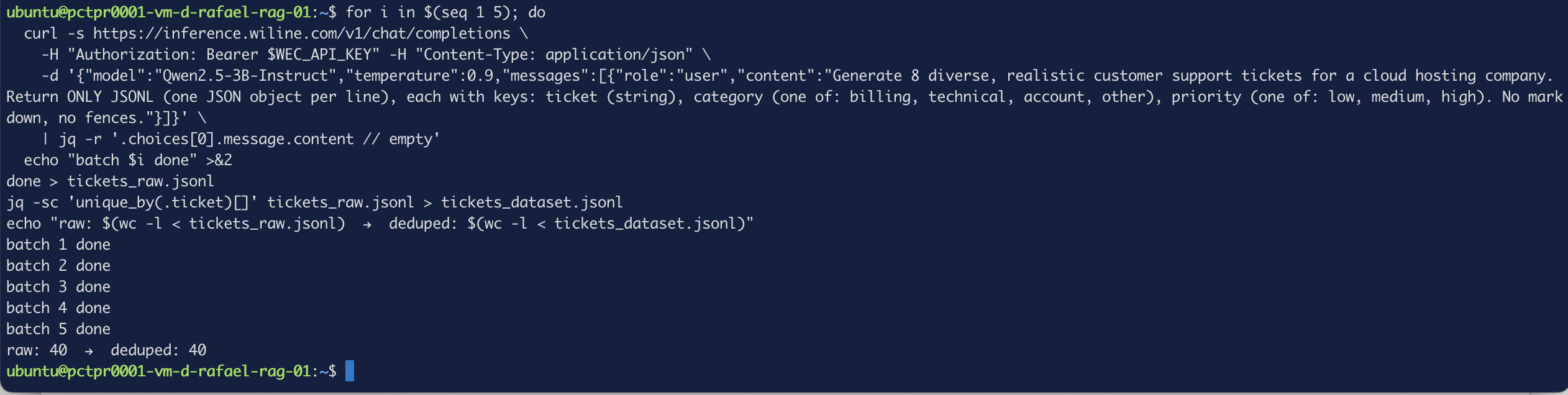 Figure 3. Scaling up: 5 batches → 40 rows after exact-duplicate removal.
Zero exact duplicates across 5 batches — a good sign the model isn't just repeating itself.
unique_by(.ticket) only catches identical text. Two differently-worded "server is down"
tickets are semantic near-duplicates and will slip through — catching those needs
embedding-based clustering, a more advanced step. For a starter dataset, exact dedup is fine.
Note the // empty in the jq filter. If a call fails (revoked key, model timeout), the
response has no content and .choices[0].message.content is null — a plain jq -r would then
write the literal word null into your dataset, silently poisoning it. // empty drops those,
so a failed call adds nothing instead of a junk row. Always check the row count afterward.
See Troubleshooting.
Validate the full 40 the same way as Step 2 (jq -e ., the enum check, and both distributions).
Ours came out balanced: technical 15 · account 10 · billing 10 · other 5; priority high 13 ·
medium 14 · low 13.
You now have a repeatable pipeline for real test data — 40 validated, deduped, labeled rows where you used to have two.
Step 4 — Convert to a Promptfoo dataset
Promptfoo reads test cases from a CSV: each column becomes a variable, and the special
__expected column holds a per-row assertion. We map ticket → the prompt var and
__expected → icontains:<the correct category>. jq @csv handles the commas and quotes
inside ticket text:
{ echo 'ticket,__expected'; jq -r '[.ticket, ("icontains:" + .category)] | @csv' tickets_dataset.jsonl; } > tests.csv
wc -l tests.csv          # 41 = header + 40 rows
Step 5 — Put the dataset to work
The dataset is the deliverable — everything from here is what it unlocks. First payoff: a model comparison you can actually believe. On two hand-typed cases a ranking is noise; on 40 real, labeled rows it's a measurement. Add each WEC model as a provider and run the whole set:
cat > promptfooconfig.yaml <<'EOF'
description: "Ticket classifier — model matrix on the synthetic 40-row dataset"
providers:
  - id: openai:chat:Qwen2.5-3B-Instruct
    config: { apiBaseUrl: https://inference.wiline.com/v1, apiKeyEnvar: WEC_API_KEY, temperature: 0 }
  - id: openai:chat:Qwen3.5:9B
    config: { apiBaseUrl: https://inference.wiline.com/v1, apiKeyEnvar: WEC_API_KEY, temperature: 0 }
  - id: openai:chat:Qwen3.5-122B
    config: { apiBaseUrl: https://inference.wiline.com/v1, apiKeyEnvar: WEC_API_KEY, temperature: 0 }
prompts:
  - |
    Classify this support ticket. Return ONLY JSON with keys:
    "category" (one of: billing, technical, account, other),
    "priority" (one of: low, medium, high),
    "summary" (string, max 12 words).
    Ticket: {{ticket}}
defaultTest:
  options:
    transform: |
      const m = output.match(/\{[\s\S]*?\}/);
      return m ? m[0] : output;
  assert:
    - type: is-json
      value:
        type: object
        required: [category, priority, summary]
        properties:
          category: { type: string, enum: [billing, technical, account, other] }
          priority: { type: string, enum: [low, medium, high] }
          summary: { type: string }
tests: file://tests.csv
EOF
npx -y promptfoo@latest eval -c promptfooconfig.yaml
The result is the opposite of what "bigger is better" would predict:
| Model | Accuracy | Completion tokens / ticket |
|---|---|---|
Qwen2.5-3B-Instruct (non-reasoning) | 85% (34/40) | ~30 |
Qwen3.5:9B (reasoning) | 47.5% (19/40) | ~965 |
Qwen3.5-122B (reasoning) | 15% (6/40) | ~1,013 |
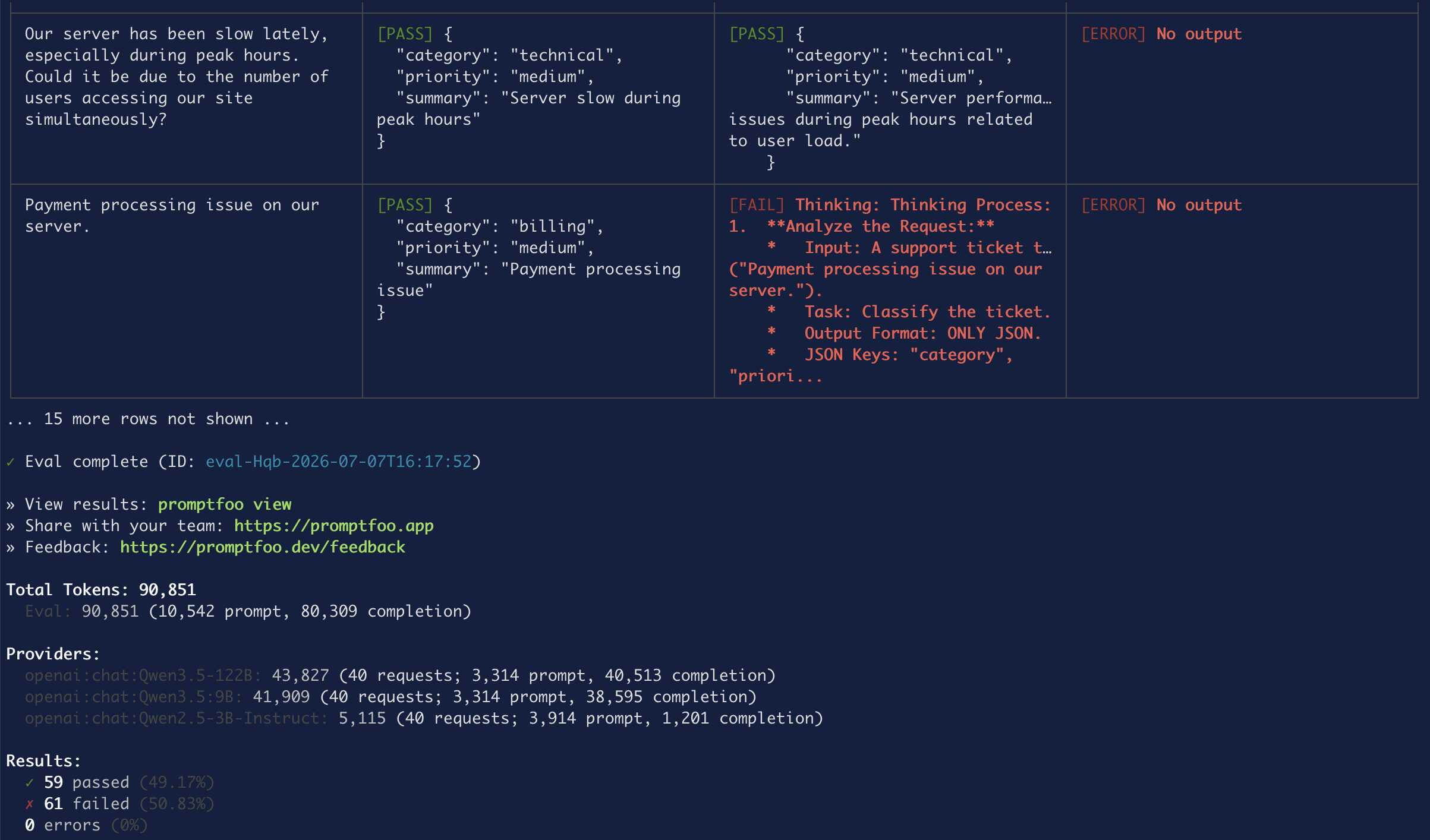 Figure 4. Same dataset, three models — the small non-reasoning model wins by a mile.
The small, non-reasoning model wins decisively — and the bigger the reasoning model, the worse
it does. The reasoning models aren't dumber at classifying; they bury the JSON in their
chain-of-thought. Qwen3.5:9B leaks Thinking: … into the output; Qwen3.5-122B often returns
an empty answer entirely — all ~1,000 tokens spent reasoning, nothing parseable left. They also
burn ~30× more tokens per ticket, which is why the full matrix took 12m 31s, almost all of
it spent waiting on the two big models. For structured output, thinking out loud is a liability,
not an advantage — a counterintuitive finding you'd never get from a leaderboard.
But notice what actually made that finding possible: the dataset. On two hand-typed cases those percentages would be coin-flips; 40 labeled rows are what turn "which model?" from a guess into a measurement. The comparison is the reward for building the data — not a substitute for it.
You can now pick a model with evidence instead of vibes — something no leaderboard can do for you, because it doesn't know your task.
(The transform grabs the first {…} block with a non-greedy *? match — cheap insurance for
models that wrap JSON in prose, exactly like part 2.)
category here — priority is your next assertionThe __expected column grades only the predicted category against the label. The dataset also
carries a priority label we don't score yet. To grade both fields at once, add a javascript
assertion that parses the JSON output and compares priority too — the exact same pattern, one more
check. Scoring more of what you generated is the cheapest way to make an eval stricter.
Step 6 — Dig into the winner's failures
Take the winner — Qwen2.5-3B at 85% (34/40) — and pull its 6 failing tickets, comparing each
to its label. (__expected isn't stored as a variable — Promptfoo consumes it as the assertion —
so read the ground truth from the source dataset.) Because the data is freshly generated, your exact
failures will differ, but they consistently split into two recognizable kinds — and neither is
just "the model is dumb". Representative examples:
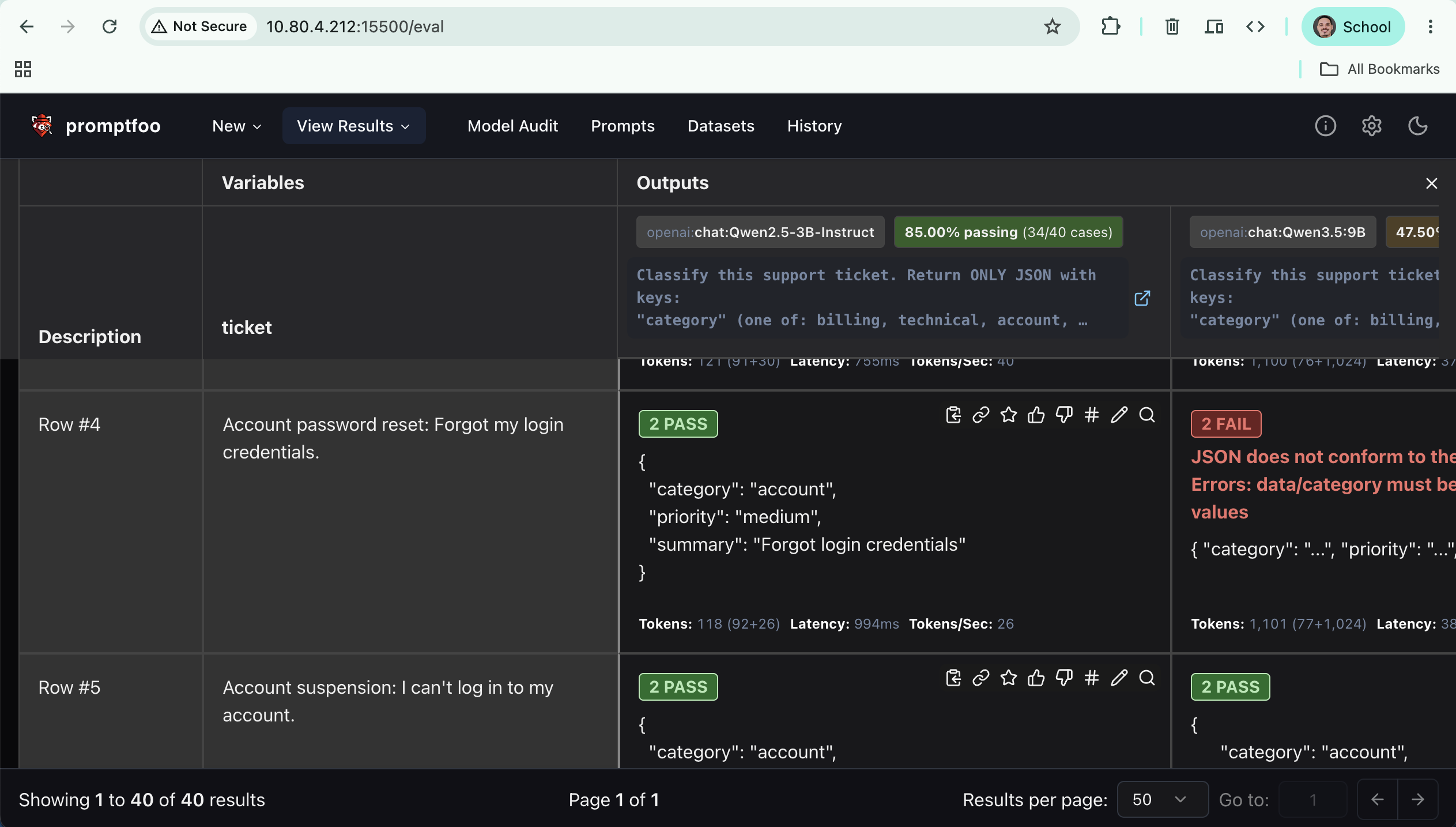 Figure 5. The web report makes it easy to scan which rows failed and open each one.
| Ticket | Label | Why it's tricky |
|---|---|---|
| "educational discounts for startups…" | other | Debatable — it's about pricing, so billing is defensible |
| "grant a junior dev IAM access to S3…" | account | Debatable — access control vs infrastructure |
| "feedback on the API documentation…" | other | Debatable — feedback vs technical |
| "update the card and add a user…" | account | Multi-intent — genuinely two categories at once |
The rest are ordinary misclassifications. The real, day-to-day lessons:
- Your synthetic labels are not gospel. A chunk of "failures" are label disputes — review and fix them, or your eval measures the wrong thing.
- Single-label classification breaks on multi-intent tickets. Real inputs aren't always one category.
- An 85% headline hides both. You only learn why by reading the failing rows — which is the entire reason to eval on a real dataset instead of two examples.
What we built
- The core skill: a repeatable pipeline to generate, validate, dedupe, and version an eval dataset from the WEC API — real test data instead of two hand-typed cases.
- The discipline that makes it trustworthy: generated labels aren't gospel. You validate enums and balance, and you review the disputes — a chunk of "failures" are your own labels being wrong.
- Proof it matters: coverage surfaces what two cases hide — genuine misclassifications and debatable, multi-intent tickets you'd never think to type by hand.
- A bonus the data unlocks: a trustworthy model comparison — here a 3B non-reasoning model beat a 122B reasoning one for structured output, the opposite of "bigger is better."
Commit tickets_dataset.jsonl and tests.csv alongside your eval config, and regenerate/grow
the dataset as your product changes.
Troubleshooting
401 / invalid API key
{ "error": { "message": "Authentication Error, invalid API key", "code": "401" } }
The key is expired, revoked, or malformed. Generate a fresh one in Inference → API Keys,
re-export it, and re-sanitize (tr -cd '[:print:]') in case the paste carried an invisible character.
jq: "Cannot index array with string"
This comes from ["billing", ...] | index(.category) — inside the pipe, . is the array, so
.category indexes the array. Use the IN() idiom instead:
jq -c 'select((.category|IN("billing","technical","account","other")|not))' tickets.jsonl
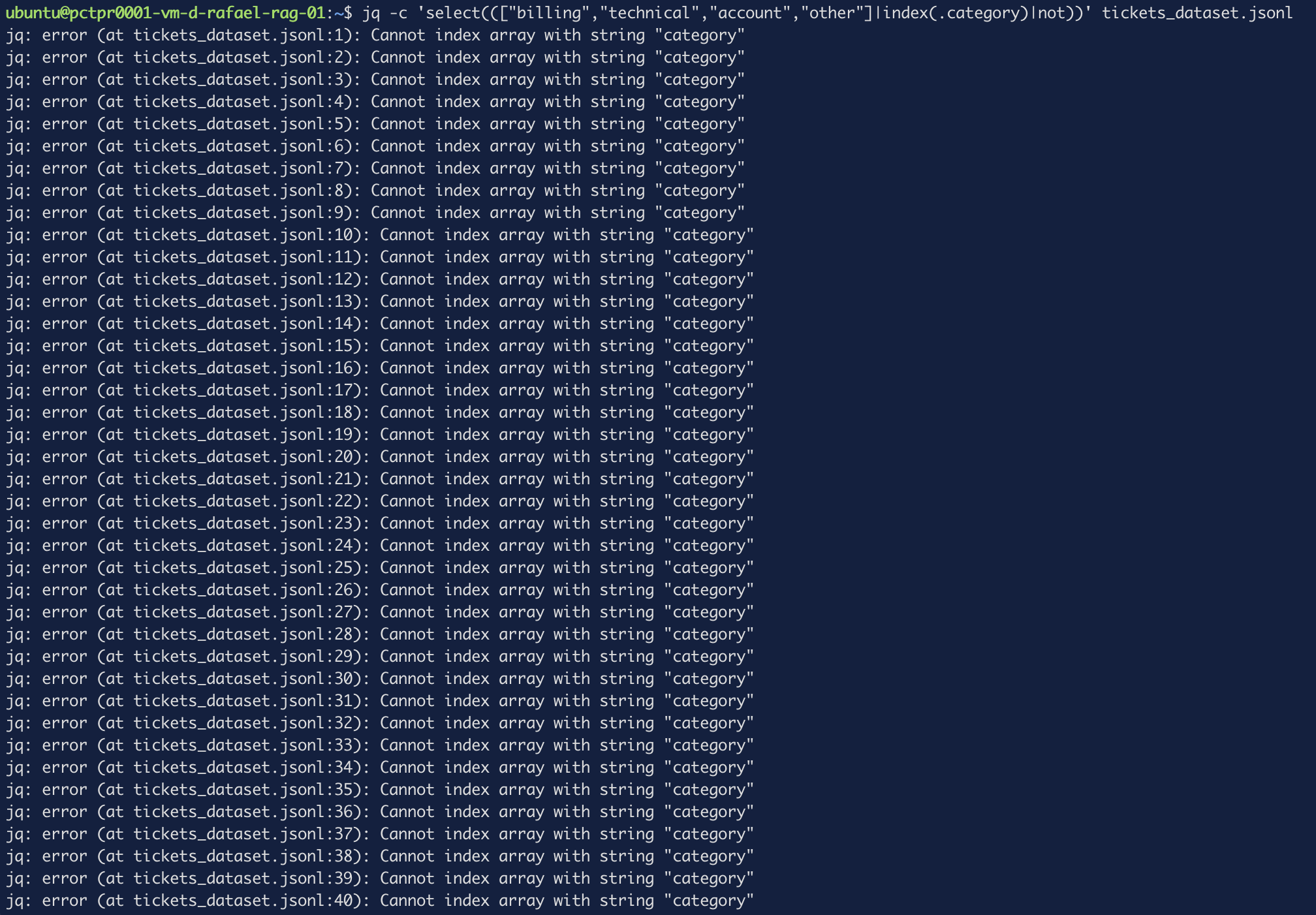 Figure 6. The
 index(.field) mistake — inside the pipe, jq tries to index the array with a string.
Your dataset has rows that are just null
A null row means a generation call failed but the loop still wrote its (empty) result. Usual
causes: an expired/revoked API key, or the model timing out. Fixes: extract with
.choices[0].message.content // empty so a failed call writes nothing instead of null;
re-check wc -l after every generation run; and if calls hang, add a per-request timeout
(curl -m 60) and consider a lighter, faster model for bulk generation.
__expected is null in the results JSON
That's expected — Promptfoo consumes the __expected CSV column as the row's assertion, so
it isn't kept as a variable. To inspect ground-truth labels for failing rows, read them from your
source dataset (tickets_dataset.jsonl) rather than the results file.
What's next
You now have a real dataset — but it runs in CI, offline. The next step is watching your app in production: self-hosting Langfuse to trace every call, track latency and cost, and run evals (using this dataset) against live traffic. That's where offline testing becomes real observability — and it's the next post in the series.